
Born in Lima, Peru, Guido studied Art at the "Escuela Nacional Superior de Bellas Artes del Perú" and graduated from art school with several awards and honors. In 1992-‐93, he moved to Chile and resumed his studies there, studying for his Bachelor of Aesthetics Degree and later his Master's degree in History and Theory of Art, later an MFA at SVA. He taught Art for many years in Chilean universities before moving to the United States. Once here, he taught at Mitchell College, UCONN, TTCC, and York Correctional in CT. Garaycochea cofounded Expressiones Cultural Center in New London, CT, in 2009, a non‐profit organization that promotes understanding between the Anglo and Hispanic communities through the arts to bridge cultural differences and showcase Latin American arts and culture. As curator of the artist residency at Expressions, he has promoted and encouraged the careers of numerous Latin American artists. He shares his time working as the Adult Programs and the New Yorkers program manager at the Queens Museum in New York while keeping his artistic practice alive in his Manhattan studio as a studio program member at the Elizabeth Foundation for the Arts and participating in various exhibitions.
ARTIST STATEMENT
My work is rooted in an ongoing conversation with the planet—one shaped by observation, memory, and a deep concern for the accelerating transformations unfolding across our ecosystems.
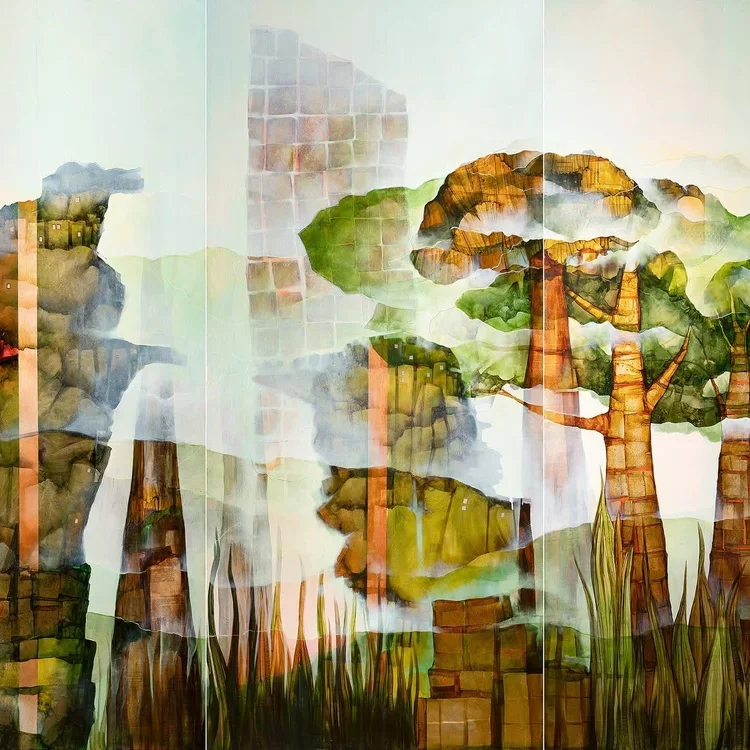
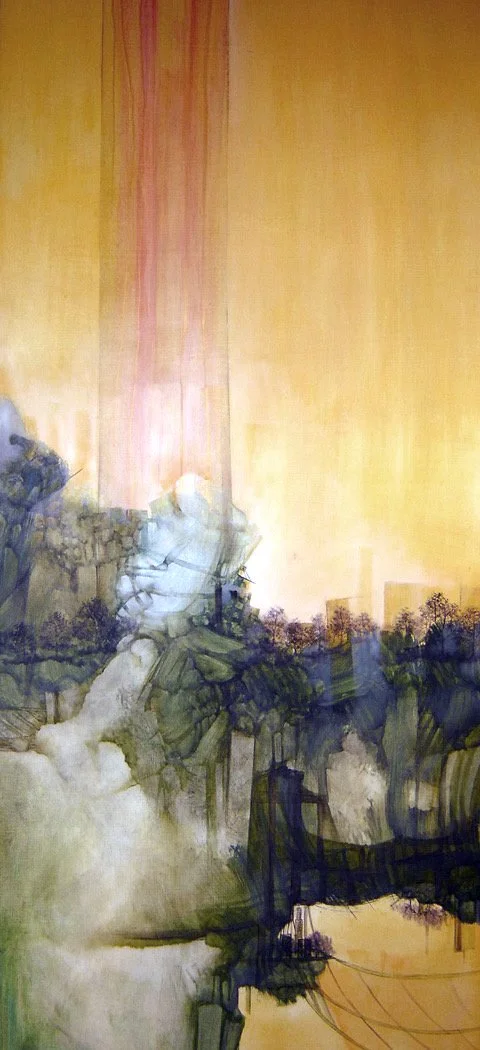
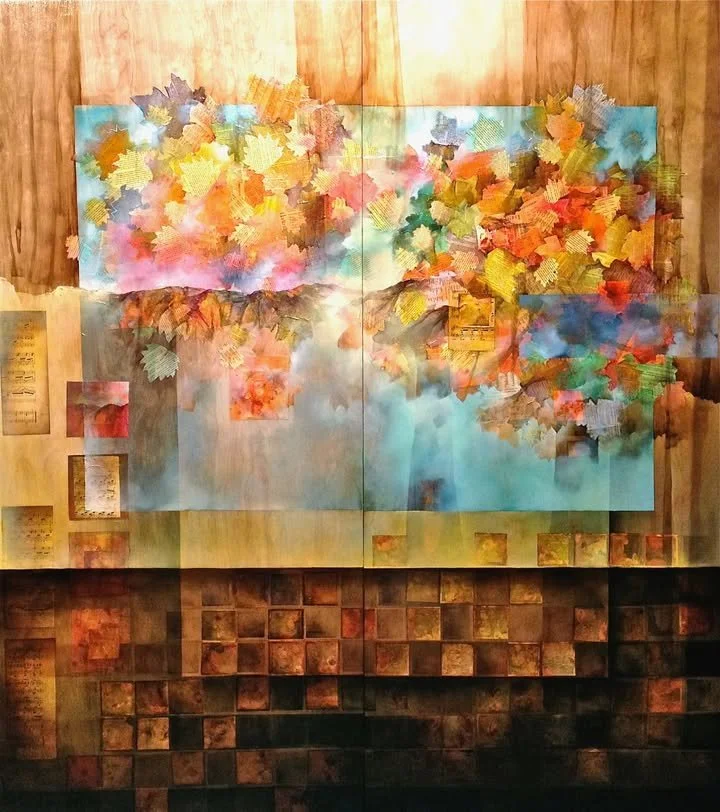
I approach painting as a form of environmental witnessing. Through layered forms, shifting transparencies, and evolving spatial relationships, I investigate the fragile balance between what nature creates and what humanity alters. My practice is a meditation on the invisible forces—atmospheric, geological, emotional—that shape the landscapes we inhabit. These forces are in flux, and so our visual language must be, too.
As climate change accelerates, we find ourselves living in an age of thresholds: thresholds where forests meet development, where clean air meets industrial haze, where memory confronts what has already been lost. My work seeks to illuminate these thresholds—not as endpoints, but as places where awareness and action can begin.
Rather than depicting environmental crisis through literal imagery, I translate ecological concerns into atmospheres of uncertainty and resilience. The interplay of structure and organic form in my compositions reflects the dualities of our time: destruction and regeneration, vulnerability and endurance, human ambition and natural wisdom. In the studio, these tensions become material; they seep into color, gesture, and space.
Ultimately, my work is an invitation to slow down and look closely—to recognize that the landscapes we so often take for granted are intricate, storied, and deeply affected by our choices. It’s urgent to share the message: caring for the Earth is no longer optional. It is an urgent, creative, and collective act.